Small-space living · Bedroom design
Small New York Bedrooms: Choosing Furniture for Smarter Storage
In a compact New York bedroom, every furnishing has two jobs: serve a daily routine and earn its place in the floor plan. A tall chest or carefully chosen armoire can add meaningful storage without claiming more of the room than necessary—but only when its dimensions, doors and contents make sense together.
New York bedrooms are often asked to accommodate an ambitious list: clothing, linens, work essentials, perhaps a suitcase or two, and enough open floor to make getting dressed feel like something other than a logistical exercise. The usual response is to add storage wherever a gap appears. The better response is to pause and ask what kind of storage the room actually needs.
A useful piece can make a small room feel calmer, not fuller. That distinction comes down to fit, function and proportion. A narrow chest may take advantage of vertical space. An armoire may combine hanging and folded storage behind one set of doors. A wide dresser may offer generous capacity but occupy valuable circulation space. None is automatically the right answer. The room’s measurements—and the belongings it must hold—make the decision.
Vermont Furniture Designs offers solid-wood bedroom furniture in forms that can support different storage needs, including drawer chests, dressers and armoires. The practical task is to match those forms to the room, rather than choosing by appearance or drawer count alone. Begin with a plan, measure twice, and leave enough space for the furniture to work after it arrives.
Start with the room, not the furniture
Before comparing pieces, measure the bedroom as it functions. Record the length and width of the room, ceiling height and the position of the bed, windows, radiators, closets and outlets. Then measure doorways and the route the furniture will take into the apartment. A chest that fits beautifully on a wall is of little use if it cannot turn through the hallway or clear the bedroom door.
Measure the wall space available for a piece, but do not stop there. Note how far the bedroom door swings, whether closet doors slide or open outward, and where drawers or cabinet doors need to travel. A dresser can fit against a wall and still make the room difficult to use if its drawers collide with the bed or block the path to the closet.
For a simple layout check, mark the furniture’s footprint on the floor with painter’s tape or paper. Add the area needed for drawer extension and door movement. Walk the route between the bed, entrance and closet. The aim is not to preserve a perfect, empty rectangle; it is to avoid making ordinary movements awkward.
- Measure the full route. Check hallway width, turns, stairs, elevator dimensions and door openings as well as the bedroom itself.
- Record obstructions. Include baseboards, radiators, trim, sloped ceilings and outlets that may affect placement.
- Account for opening space. Drawers, wardrobe doors and closet doors all need room to move.
- Protect walking paths. Make sure you can get in and out of bed and reach the room’s main storage without squeezing past a corner.
These checks sound modest. In a compact room, they are the difference between a thoughtful purchase and a piece that turns every morning into furniture choreography.
Choose storage by what you own
Furniture is easier to select when the contents are already understood. Take stock of the items that need a home: hanging clothes, folded garments, underwear, accessories, extra bedding and seasonal pieces. Separate the things used every day from those reached for occasionally. A storage plan should make frequent routines easy and less common tasks possible without crowding the room.
Drawers work well for folded clothing, smaller garments and accessories that benefit from being contained. Shelves can hold folded items, linens or baskets, and adjustable shelves allow the arrangement to change as needs shift. A hanging bar serves garments that are best kept on hangers, but hanging space can be inefficient if the wardrobe consists mostly of folded clothes. Likewise, a deep drawer may be generous on paper yet frustrating if small items disappear at the back.
Think about volume as well as categories. A tall stack of sweaters takes up a different amount of space from a row of shirts on hangers. Bulky blankets need more room than socks. If the storage problem is a lack of hanging space, a second drawer-heavy dresser may not solve it. If the problem is a shortage of accessible folded storage, an armoire with a large hanging section may devote space to the wrong task.
A quick inventory can be practical rather than exact. Count the drawers and shelves you use now, identify what remains in laundry baskets or piles, and estimate what might move into the new piece. This makes it easier to compare the internal layout of different furniture forms and harder to be distracted by a headline number of drawers.
Tall chest or armoire? The trade-off is in the details
When floor area is limited, using height can create useful capacity without spreading furniture across another wall. A tall chest concentrates drawers in a relatively narrow footprint and can be a good fit for folded clothes, linens or accessories. Its appeal is straightforward: it takes up less width than many wide dressers while keeping storage close at hand.
Height brings its own considerations. Check the ceiling clearance and the proportions of the room. A tall piece can feel imposing if it is crowded between other large furnishings or placed where it interrupts a line of sight. Confirm that drawers extend fully and remain accessible beside the bed. Heavier items are generally more comfortable to store lower, while frequently used garments belong where they are easy to reach.
An armoire combines enclosed storage in a single vertical form. Depending on its configuration, it may provide a clothes-hanging bar and adjustable shelves, giving it a role in rooms without a built-in closet or in bedrooms where the existing closet is small. Adjustable shelves are particularly helpful because they allow the interior to adapt to folded clothing, boxes or linens instead of locking the owner into one arrangement.
Armoires require careful planning around doors and depth. Measure the full depth of the piece and the arc of its doors, then check whether they can open without hitting the bed or blocking the room. A hanging bar needs enough interior depth for the clothing it will hold; if the furniture is too shallow, garments may press against doors. As with a tall chest, height should be checked against ceiling features and delivery access.
The choice is not simply between “more storage” and “less storage.” It is a choice about storage behavior. A tall chest organizes primarily by drawer; an armoire can mix hanging and shelf storage. The right option is the one that matches both the room’s footprint and the way its owner gets dressed.
A dresser can work in a small bedroom—if its footprint earns its keep
Dressers offer familiar, easy-to-sort storage, but width and depth matter as much as capacity. A broad dresser may be an effective choice when it can replace several smaller containers, or when it fits beneath a window without interfering with the bed. In a room where every inch of floor is already spoken for, its footprint may be harder to justify than a narrower, taller piece.
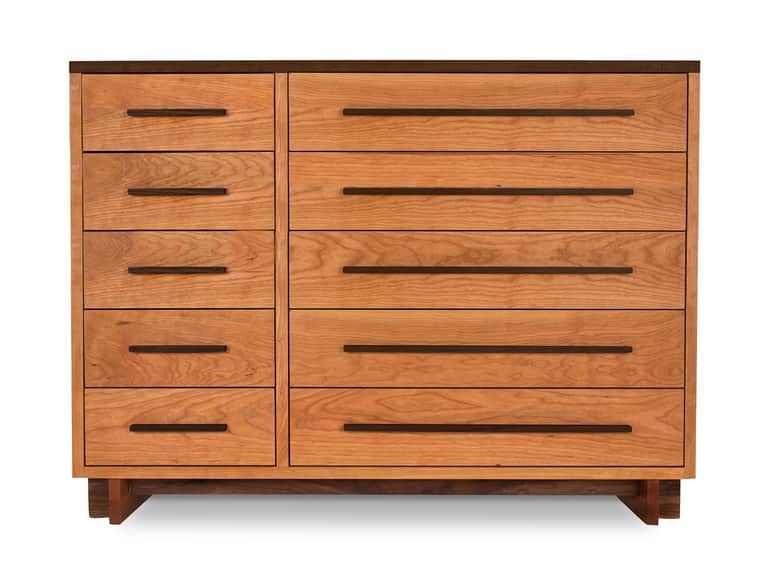
Vermont Furniture Designs’ Modern American 10-Drawer Dresser is made of solid wood, has ten drawers and an eco-friendly oil finish. Those features may suit someone who needs substantial enclosed storage and has measured enough wall space for a larger dresser. The drawer count alone, however, cannot tell you whether it fits a particular New York bedroom. Compare its actual dimensions with the room plan and opening clearances before deciding.
Another option, the Modern Craftsman 10-Drawer Dresser, combines solid-wood construction with Craftsman and Mission design influences. It is finished with linseed oil and wax. Its ten drawers offer significant storage, making it worth considering where there is enough room to accommodate its footprint and where a double-dresser layout suits the contents. In a tighter bedroom, that same capacity may come at the expense of a clear path or breathing room.
Solid wood can be a long-term material choice, but durability does not eliminate the need for a realistic space plan. Consider the full object, including drawer extension, surrounding traffic and the visual weight of the piece. A simple silhouette may feel more at home in a crowded room than a furniture arrangement that relies on every available surface being occupied.
Make the layout serve the daily routine
Think through a typical morning. Where do you reach for socks, shirts and accessories? Where does laundry collect? Is there room to open a drawer while standing comfortably? A useful layout places everyday clothing where it is convenient, while less frequently used items can occupy higher shelves or drawers that are not as easy to reach.
Keep the most direct route through the room open. That may mean placing a narrow chest along a wall rather than putting a wider piece between the bed and the closet. It may mean choosing an armoire only if its doors can open without cutting across the main walkway. The best floor plan does not merely fit the furniture; it makes the room easy to move through.
In a rental, flexibility has special value. Avoid assuming that every wall can be altered, and confirm building requirements before arranging delivery or installation. Freestanding furniture can provide storage without a permanent renovation, though tall pieces should be placed and secured according to manufacturer guidance and the conditions of the home. Renters should also check whether a piece can be moved through the apartment’s entrance, not just into the current bedroom.
Small bedrooms often benefit from a clear visual hierarchy. Let one substantial storage piece do the work of several scattered bins or small cabinets. Keep frequently used surfaces relatively clear, and avoid placing a large furnishing where it blocks daylight or makes the window feel diminished. The aim is practical order—not a room stripped of personality.
Organize the inside before adding more furniture
Sometimes the apparent need for another piece of furniture is really a problem of inaccessible storage. A drawer that mixes accessories with winter clothing is harder to use than one organized by purpose. Shelves that are too tall may waste vertical space, while a pile of folded items may topple each time something is removed. A modest system can improve the capacity of furniture already in the room.
- Give drawers a clear job. Group similar items together so that clothes can be found and put away without rearranging everything.
- Use adjustable shelves thoughtfully. Set the spacing around the belongings being stored, while leaving enough clearance to remove them easily.
- Place daily essentials within easy reach. Reserve higher or lower storage for seasonal and occasional items.
- Keep categories flexible. Leave some room for a wardrobe change, rather than filling every shelf so tightly that nothing can shift.
- Review before buying containers. Measure the drawer or shelf first; storage accessories that do not fit can create more clutter.
Seasonal rotation can also reduce pressure. Store off-season items in a designated, accessible place rather than allowing them to compete with everyday clothes for the most convenient drawers. The process need not be elaborate: a periodic review of what is in use can reveal whether the room needs more furniture or simply a better arrangement.
A compact decision checklist
Before choosing between a chest, dresser and armoire, work through a few questions. They turn a broad search for “more storage” into a specific decision based on the room and its routines.
- What is the storage gap? Identify whether the shortage is hanging space, drawers, shelves or room for linens.
- How much wall and floor space is available? Measure the footprint and account for doors, drawers and walkways.
- What must the piece hold? Match the interior configuration to real belongings rather than an imagined ideal wardrobe.
- Can the furniture be delivered? Check the whole route from building entrance to bedroom, including turns and elevator clearance.
- Will the arrangement still work day to day? Test access to the bed, closet, windows and essential storage.
- Can the interior adapt? Adjustable shelves and a useful mix of storage types may serve changing needs better than a fixed layout.
If a piece passes these checks, its style and finish can become part of the final decision. Wood tone, hardware and design character matter; they are simply more useful after the practical questions have been answered.
The room should feel more usable, not merely more furnished
Small New York bedrooms reward careful choices. A tall chest can turn a narrow stretch of wall into dependable drawer storage. An armoire can bring shelves and hanging space together when its depth and door clearance work. A dresser can absorb a large share of a wardrobe when the room has enough width to support it.
Vermont Furniture Designs’ solid-wood forms offer different approaches to that problem, from drawer-rich dressers to taller storage furniture. The soundest choice begins with measurements and ends with a room that supports ordinary life: getting dressed, putting things away, changing the bedding and moving across the floor without negotiating an obstacle course.
In a compact room, smarter storage is not a contest to fit in the most furniture. It is a way of making the space work harder while asking less of its occupant. Measure the room, understand what needs to be stored and choose the form that serves both. Then leave enough room for the bedroom to remain a bedroom.